Arab region among world’s most climate-vulnerable, World Meteorological Organisation finds
The Arab region recorded its hottest year on record in 2024, with 35 extreme events causing over 300 deaths and affecting 3.77 million people, as WMO warns warming is twice the global rate.
The Arab region experienced the hottest year on record in 2024, leading to deaths and disruptions to people's social and economic lives, the UN Climate watchdog's inaugural report shows.
The World Meteorological Organisation (WMO) report on the State of Climate describes the Arab region as comprising 22 countries spanning approximately 13 million square kilometres.
More To Read
- WMO warns of escalating climate risks, says CO₂ levels hit record high in 2024
- Millions at risk as World Meteorological Organisation warns of gaps in early warnings
- Air pollution is on the rise – but not everywhere, says UN weather agency
- IGAD climate centre predicts below-average rains in Eastern and Northern Kenya
- Heat stress on the rise, slashing work productivity by 2-3 per cent, report warns
- Climate change: 2024 caps 'decade of deadly heat', UN says
It includes parts of North Africa (Mauritania, Morocco, Algeria, Tunisia, Libya, and Egypt), the Near East (Iraq and the Levant), the Arabian Peninsula (Saudi Arabia, Yemen, Oman, the United Arab Emirates, Qatar, Bahrain, and Kuwait), and East Africa (Somalia, Sudan, and Djibouti).
The report describes these nations as among the most climate-vulnerable regions in the world, characterised by temperatures rising at twice the global average, and droughts becoming more frequent and severe, particularly affecting water availability and agriculture.
"In 2024, 35 extreme weather and climate events were reported across the region. These events were associated with over 300 fatalities and affected approximately 3.77 million people. Floods were the most frequently reported hazard, with 22 events, including six flash floods. North Africa was the most affected subregion, followed by the Arabian Peninsula. Heatwaves were the second most frequently reported event, with five occurrences recorded across multiple countries," the report says.
According to the report, the rate of warming in the Arab region has accelerated in recent decades, reaching approximately twice the global average between 1991 and 2024. During this period, regional temperatures rose by about 0.43°C per decade (0.40–0.48°C), compared to a global land-ocean warming rate of around 0.2°C per decade.
"All four subregions show a consistent and increasing warming trend (Figure 4). From 1961 to 1990, the regional warming rate was approximately 0.17°C per decade [0.14–0.23°C], underscoring the sharp rise in recent decades. The last decade (2015–2024) was 0.58°C warmer than the 1991–2020 average and 1.44°C warmer than the 1961–1990 baseline. If the current warming rate continues, the mean temperature increase in the Arab region could reach 1.8°C with respect to the 1991-2020 average by 2050," the WMO warns.
In 2024, all Arab sub-regions recorded temperatures above the 1991–2020 average, with the highest temperature anomalies recorded in North Africa.
Temperatures exceeded 2.0°C above the 1991–2020 average in Northern Algeria, the Atlas Mountains in Morocco, and most of Tunisia.
Temperature anomalies ranging from 1.4°C to 1.6°C were also observed across the southern Arabian Peninsula over Rub Al-Khali's desert in Saudi Arabia, Oman, Yemen, Jordan and Syria, while the lowest temperature anomalies of the year were observed in central Sudan and the southeastern corner of the Arabian Peninsula.
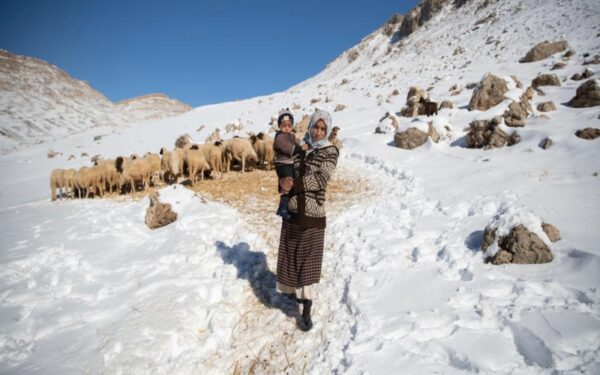 Snow in the Moroccan Atlas Mountains. (Photo: Mosa'ab Elshamy/AP/picture alliance via DW)
"11 of the 22 countries in the Arab region recorded their warmest year on record in 2024. These include Algeria, Bahrain, Libya, Syria, Lebanon, Morocco, Tunisia, Yemen, Qatar, Comoros, and Sudan," the report shows.
At the same time, the annual precipitation exceeded the 1991–2020 average across much of the southern and eastern parts of the Arab region last year.
Totals reaching 150 per cent to 200 per cent of above normal were also recorded in northern Sudan and parts of the Arabian Peninsula, including the United Arab Emirates (UAE), the southwestern coastal areas of Saudi Arabia, and Yemen.
In contrast, a marked rainfall deficit affected most of North Africa, including coastal areas of Morocco, northern Algeria, and Libya, where precipitation deficits reached 40 per cent below the 1991–2020 average as below-normal annual rainfall also prevailed over eastern Egypt, the western parts of the Near East countries, and areas of Somalia, the report adds.
Other Topics To Read
At the same time, Northwestern Africa experienced drought conditions for the sixth consecutive year, though intense rainfall events late in 2024 brought partial relief in parts of Algeria and Tunisia.
Intense wet spells also led to widespread pluvial flooding in several countries of the Arabian Peninsula, including parts of Saudi Arabia, Bahrain, and the United Arab Emirates.
Over the period 1981-2024, the WMO says East Africa showed a positive trend in annual precipitation, while North Africa has exhibited a negative trend since 2010, with pronounced deficits over the past 6 years.
In terms of heatwaves, the document says the Middle East and North Africa are among the hottest regions in the world, with climate projections indicating a continued intensification of summer heat extremes in both subregions.
In 2024, significant heatwave conditions were observed across the Near East and northern parts of the Arab region, particularly in Syria, Iraq, Jordan, Egypt, Libya, and eastern Algeria, which also affected the far southern regions of Sudan.
"The longest durations were recorded in southern Sudan, where heatwaves exceeded 14 consecutive days, followed by central and northern Libya, which experienced several heatwaves lasting between 12 and 14 days," the report says.
Generally, the number of annual heatwave days has increased across all four subregions of the Arab region, with a more pronounced upward trend in recent years, especially in North Africa and the Near East, reflecting a shift toward more extreme and prolonged heat events.
The report notes that in 2024, the number of days with maximum temperatures exceeding 50°C ranged from 6 to 12 in the southeastern parts of the Near East, particularly Iraq.
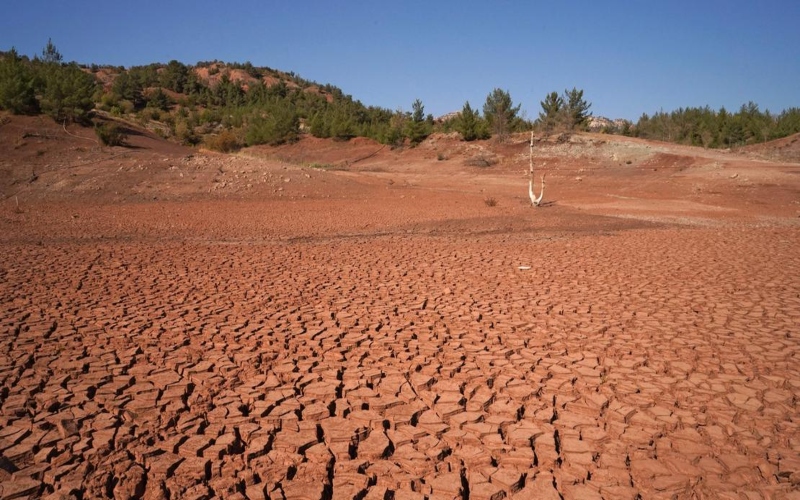
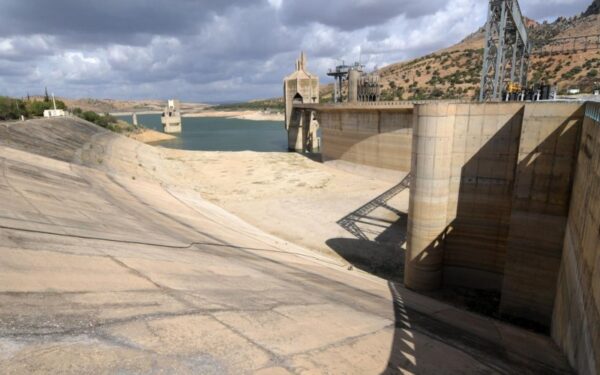 Tunisia is likely to face water crunches in the future, as seen at this drying reservoir behind the Sidi Salem dam in the north of the country. (Photo: Fethi Belaid/AFP/Getty Images via DW)
Elsewhere, such extreme temperatures were recorded on 1 to 2 days in Kuwait and northeastern Saudi Arabia.
Drought was also ranked among the most prevalent extreme events in the Arab region in 2024, where the conditions were most prevalent in northern Africa, including mainly Morocco, Algeria, Tunisia, and parts of Libya.
Extreme meteorological drought conditions, defined by areas with Standardised Precipitation Index (SPI), were also observed in northwest Algeria and northern Morocco, with 2024 being the sixth dry year in a row in Morocco. Although not as widespread as in North Africa, drought conditions were also recorded in Syria and Iraq in 2024.
Wildfire activity across the Arab region was recorded as relatively low in 2024.
The report notes that burned areas were mainly concentrated in southern Sudan and eastern Iraq, followed by northern Syria and southern Egypt, but Lebanon experienced an unusually prolonged wildfire season in 2024, caused by a combination of dry vegetation, high winds, and below-average precipitation contributed to at least nine wildfires across the country in October.
Other areas experienced minimal or negligible wildfire activity during the year.
As a result of these weather patterns, the region experienced increasing exposure to climate-related hazards, including floods, heatwaves, and storms, climate threats that continuously intersect with ongoing socio-economic challenges such as rapid urbanisation, conflict, poverty, and population growth.
The report is meant to aid in the development of climate resilience programmes and early warning systems that help save lives and sources of livelihoods.
"Mitigation efforts across the Arab region are gaining momentum, particularly through a shift toward clean energy and sustainable urban development. Several countries have committed to increasing the share of renewable energy in their national energy mixes, with targets of up to 40 per cent by 2030. These mitigation strategies, alongside adaptation and water security efforts, form the backbone of a more climate-resilient and sustainable Arab region," the report notes.
Top Stories Today